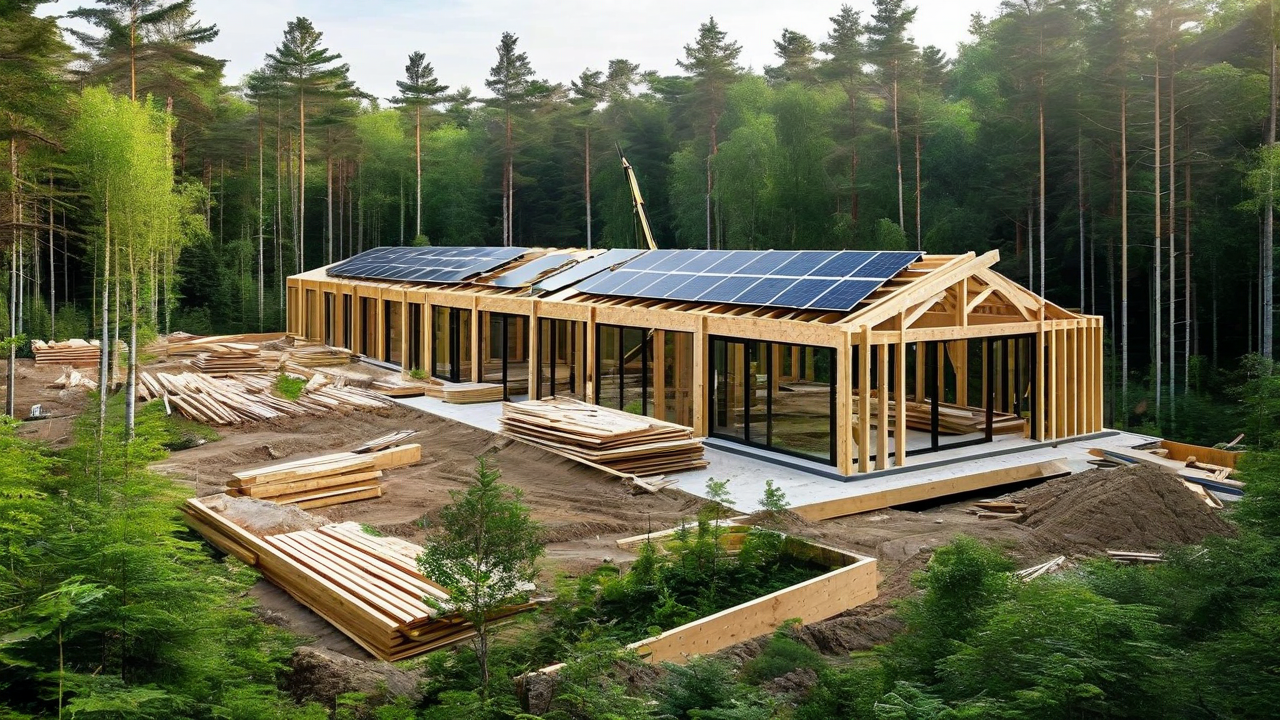
The construction and building industries stand at a crossroads between their historical carbon footprint and the net-zero commitments that governments, corporations, and investors are now demanding. With nearly 40% of global greenhouse gas emissions attributable to the built environment — split roughly between the emissions embodied in construction materials and processes and the operational energy consumption of buildings over their lifetimes — the sector faces perhaps the most consequential transformation challenge in its history.
The scale of the challenge is matched by the scale of the opportunity. Reducing the construction industry's carbon impact requires not incremental adjustments but systematic changes in how materials are specified, how buildings are designed and engineered, how construction processes are powered and managed, and how buildings are operated over their useful lives. Each of these domains is amenable to AI-powered optimization, and the aggregate potential is enormous. The companies building AI tools that help the construction industry navigate this transition have an alignment between financial return and genuine impact that makes this one of the most compelling investment categories of the decade.
Embodied Carbon: Tackling the Construction Phase Emissions
For new construction, embodied carbon — the greenhouse gas emissions associated with the extraction, manufacturing, transportation, and installation of construction materials — often represents 30-50% of a building's total lifetime carbon footprint. For buildings targeting operational net-zero through high-efficiency systems and on-site generation, embodied carbon can represent an even larger share of the whole-life impact. Yet embodied carbon has historically received far less attention than operational energy in sustainability frameworks, partly because it is harder to measure and partly because it was less visible to the building occupants and operators who were most engaged with sustainability decisions.
AI-powered embodied carbon analytics are changing this by making the calculation and optimization of embodied carbon as tractable as operational energy analysis. Platforms that integrate Environmental Product Declaration (EPD) databases — standardized carbon impact profiles for individual materials and products — with BIM models and cost estimating systems can calculate the embodied carbon of a building design at the element level, identifying which material specifications and structural systems drive the most carbon impact and surfacing low-carbon alternatives that meet performance requirements at comparable cost.
The optimization potential is substantial. Structural systems represent the largest single contributor to embodied carbon in most building types, and the choice between concrete, steel, and mass timber structures can vary the structural embodied carbon of a building by 30-50% or more. AI generative design systems that simultaneously optimize structural performance, cost, and embodied carbon can find structural solutions that conventional design processes — which optimize sequentially rather than simultaneously — consistently miss.
Whole Life Carbon Modeling and Trade-off Analysis
Sustainable building design requires making decisions that optimize carbon impact across the full building lifecycle — from materials extraction through construction, operation, and ultimately demolition and material recovery. These decisions involve trade-offs that are genuinely complex: investing more embodied carbon in better-insulated envelope construction may reduce operational energy carbon over the building's life; specifying longer-lived materials with higher initial embodied carbon may reduce replacement cycle carbon over the same period. Without rigorous whole-life carbon modeling, these trade-offs cannot be optimized — and many conventional design decisions that appear sustainable are not, when full lifecycle accounting is applied.
AI whole-life carbon platforms address this by enabling systematic lifecycle carbon analysis integrated with the design process. Rather than conducting lifecycle analysis as a separate exercise after design decisions have been made, these platforms embed carbon analysis into the design workflow, providing real-time feedback on the carbon implications of design decisions as they are made. The result is design teams that are genuinely carbon-literate — who understand which decisions move the carbon needle most significantly and can make informed trade-offs between competing priorities.
The regulatory environment is accelerating demand for these tools. Building codes in an increasing number of jurisdictions are beginning to require whole-life carbon assessment as part of the permitting process, and major corporate real estate users are incorporating embodied carbon limits into their development specifications. This regulatory and procurement pressure is creating pull demand for embodied carbon analytics platforms that is independent of the sustainability commitments of individual developers — a favorable dynamic for companies in this space.
Supply Chain Transparency and Low-Carbon Procurement
The construction supply chain is one of the most complex in any industry, spanning global networks of material producers, fabricators, distributors, and installers. For a general contractor trying to reduce the embodied carbon of a project, the ability to specify low-carbon materials depends critically on visibility into the carbon intensity of the supply chain options available — information that has historically been difficult to obtain and easy to misrepresent.
AI-powered supply chain transparency platforms are creating new infrastructure for low-carbon procurement. By aggregating and verifying Environmental Product Declarations from manufacturers, tracking product origins and transportation distances, and modeling the carbon impact of alternative supply chain configurations, these platforms give procurement teams the information they need to make genuinely lower-carbon material specifications. They also create the audit trail that is increasingly required for sustainability reporting and regulatory compliance.
The intersection of supply chain transparency with the emerging carbon market infrastructure — voluntary carbon markets, compliance carbon pricing schemes, and building-specific carbon trading mechanisms — creates additional commercial potential. Companies that can accurately measure and verify the carbon content of construction materials and processes are positioned to participate in carbon markets in ways that create value for both the platform and its users.
AI Waste Reduction on the Construction Site
Construction site waste is a significant and often underestimated source of both cost and environmental impact. Studies consistently find that construction projects waste 10-15% of the materials they purchase, generating waste streams that include structural steel offcuts, concrete debris, drywall scraps, packaging materials, and contaminated materials that often end up in landfill. Beyond the direct environmental cost, material waste represents a significant financial cost — materials are purchased, transported to site, and then discarded without being incorporated into the building.
AI tools for construction waste reduction attack this problem from multiple angles. Procurement optimization systems that analyze design quantities against standard material sizes and supplier minimums can identify procurement strategies that minimize off-cut waste before it is generated. Computer vision waste tracking systems can measure waste generation by material type in real time, providing the data visibility that enables waste reduction interventions. And AI-powered material reuse platforms are beginning to create markets for construction waste streams — connecting the project generating the waste with the projects that can incorporate it as raw material.
The Carbon Investment Thesis
The sustainability transformation of the construction industry is not charity — it is driven by economic forces that are creating durable, large-scale markets for the companies building the tools to enable it. Regulatory mandates are creating compliance demand. Corporate sustainability commitments are creating procurement criteria that reward lower-carbon products and construction methods. Carbon pricing mechanisms are attaching real financial value to emissions reductions. And the falling cost of renewable energy and low-carbon materials is making sustainable construction competitive with conventional approaches in more markets every year.
For CoConstruct AI Ventures, the intersection of construction technology and sustainability represents not a separate investment theme but a crosscutting dimension of our entire portfolio strategy. The AI construction technology companies that will achieve the largest and most durable market positions are those that embed carbon intelligence into their core value propositions — because their customers will increasingly need carbon performance as part of every decision they make, not as an afterthought.
Key Takeaways
- Construction and building operations account for nearly 40% of global greenhouse gas emissions, making the sector central to any credible net-zero pathway.
- Embodied carbon — from materials production and construction processes — can represent 30-50% of a building's total lifetime carbon footprint.
- AI generative design systems that optimize simultaneously for performance, cost, and carbon can identify structural solutions that sequential optimization misses.
- Regulatory mandates for whole-life carbon assessment are creating compliance demand for carbon analytics tools independent of voluntary commitments.
- Construction site waste represents both significant environmental impact and 10-15% material cost waste that AI procurement tools can meaningfully reduce.
- The most durable construction AI market positions will belong to companies that embed carbon intelligence into their core value propositions.
Sustainable construction AI is a priority investment theme at CoConstruct AI Ventures. If you are building AI tools that help the construction industry reduce its carbon impact, we want to hear from you. Reach out to our team or explore our current portfolio.