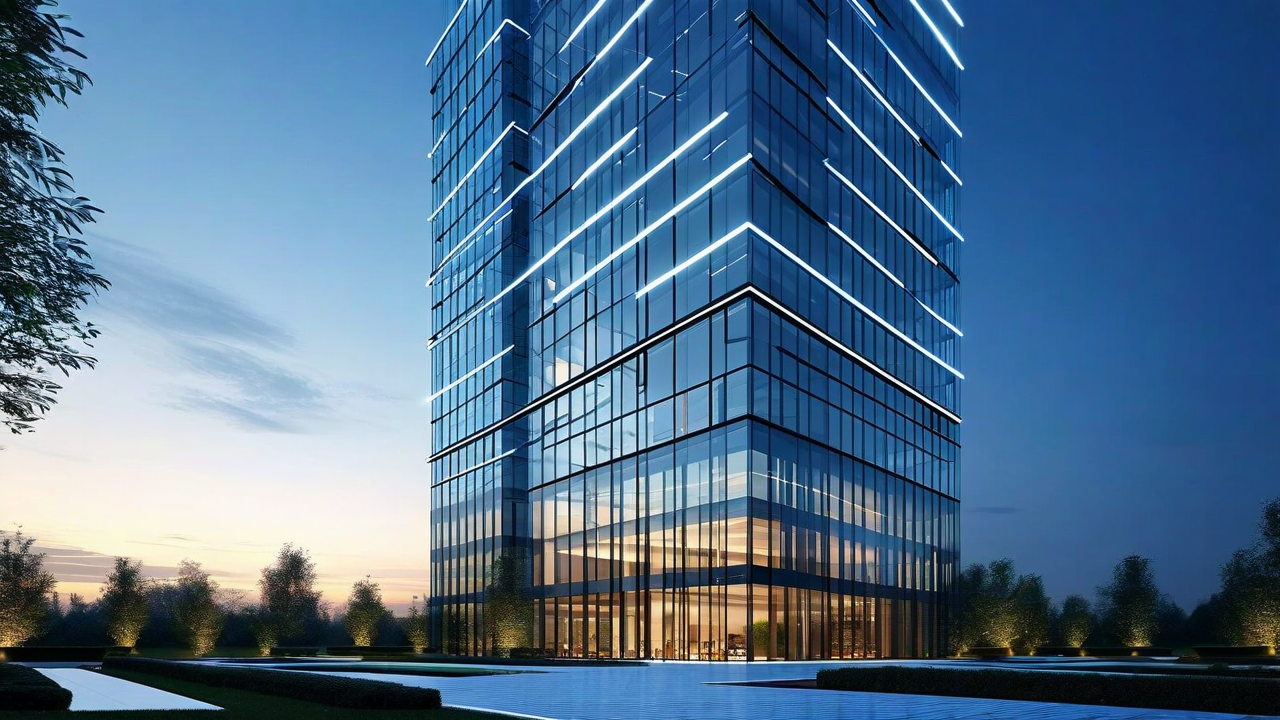
The buildings we occupy are, in the aggregate, one of the world's most significant opportunities for AI-driven efficiency improvement. The built environment accounts for approximately 40% of global energy consumption and 36% of global carbon dioxide emissions. Building operating costs — energy, maintenance, cleaning, security, and management — represent 60-80% of total lifetime building ownership cost for most asset types. And building operators today manage these costs with surprisingly primitive tools: manual inspections, reactive maintenance triggered by equipment failure, and energy management systems that respond to conditions that have already occurred rather than anticipating conditions before they arrive.
The intelligence layer that changes all of this is not a single technology but a stack of interconnected AI capabilities — sensor-driven data collection, machine learning models trained on that data, and automated control systems that translate model outputs into real operational decisions. When this stack is fully deployed and integrated in a building, the result is a facility that operates as a living, learning system: continuously measuring its own performance, detecting anomalies, optimizing its behavior in real time, and improving its models with every cycle of operation. This is what a true smart building looks like, and it is categorically different from the first-generation "smart building" systems of the 2010s that offered dashboards without intelligence.
Energy Intelligence: From Schedule-Based to Demand-Responsive
Building energy management has traditionally operated on schedules: the HVAC system runs at full capacity during occupied hours, reduces capacity at night and weekends, and responds to setpoint violations when occupants complain about temperature discomfort. This approach works adequately, but it leaves enormous efficiency opportunities unrealized. Buildings have thermal mass — they absorb and release heat over time — and the optimal HVAC strategy accounts for this dynamic behavior in ways that schedule-based systems simply cannot.
AI energy management systems change this by modeling the building as a thermodynamic system. Machine learning models trained on the building's sensor data — interior temperature at dozens of points, solar radiation, outside temperature, humidity, occupancy patterns, equipment heat loads — develop predictive models of how the building will respond to different HVAC control strategies. These models are then used to calculate the control sequences that maintain occupant comfort at minimum energy cost, accounting for utility rate time-of-use schedules, demand charges, and in some cases participation in grid demand response programs.
The energy savings from this approach are material. Across a broad range of commercial building types, AI energy optimization systems consistently deliver 15-25% reductions in HVAC energy consumption compared to conventional control systems, without any reduction in occupant comfort metrics. In large commercial buildings where HVAC energy costs run to hundreds of thousands or millions of dollars annually, these savings pay for the AI system many times over in the first year of operation. The economic case is compelling at almost any asset size.
Predictive Maintenance: From Reactive to Proactive Asset Management
Building mechanical, electrical, and plumbing systems fail. This is not a risk to be managed but a certainty to be anticipated and planned for. The question is whether that failure will be discovered when the equipment stops working — triggering emergency calls, service disruptions, and premium repair costs — or whether it will be predicted before it occurs, enabling planned maintenance that costs a fraction of emergency response.
Predictive maintenance AI works by establishing baseline performance signatures for individual pieces of equipment — HVAC chillers, cooling towers, air handling units, elevators, fire suppression systems — and continuously monitoring those signatures for deviations that indicate developing equipment problems. A chiller that is drawing 3% more current than its baseline for a given output load, or a cooling tower fan that is exhibiting slightly elevated vibration frequencies, may appear to be functioning normally in every observable way — but the AI system's models recognize these as early indicators of developing failures that, if unaddressed, will cause equipment downtime within days or weeks.
The precision of predictive maintenance systems continues to improve as the volume of training data grows. Early systems could reliably predict certain classes of failures; current systems can diagnose specific failure modes with sufficient specificity to allow maintenance teams to prepare the right parts and tools before dispatching — reducing diagnostic time on-site and enabling first-call resolution rates that would have been impossible with traditional reactive maintenance approaches.
The financial value of effective predictive maintenance extends beyond direct repair cost savings. For tenant-occupied commercial buildings, equipment failures that cause service disruptions — loss of cooling in summer, loss of heating in winter, elevator outages — are a material source of tenant satisfaction risk and potential lease-related liability. Landlords who consistently maintain their buildings at high performance levels with minimal disruption earn premium rents and attract higher-quality tenants. The operational excellence enabled by AI predictive maintenance has measurable impacts on asset value that sophisticated real estate investors are beginning to quantify and underwrite.
Occupant Experience: Intelligence That Adapts to People
The physical environment of the workplace has always affected how people feel and how productively they work. Research consistently shows that temperature, lighting, air quality, and acoustic conditions affect cognitive performance, mood, and health outcomes in measurable ways. Yet most buildings are managed to average conditions that satisfy most people most of the time — which means they satisfy no one optimally at any time.
AI occupant experience systems use dense sensor networks and, where privacy requirements permit, occupancy and preference data to individualize building conditions in ways that traditional systems cannot. Machine learning models that predict occupancy patterns can pre-condition spaces before they are occupied, eliminating the discomfort period that occurs when people arrive in a building that has been night-setback to sub-optimal conditions. Natural language building interfaces allow occupants to report comfort issues in plain language, with the AI system diagnosing the likely cause and adjusting conditions without requiring intervention from facilities staff.
Space utilization intelligence is one of the most commercially valuable applications in the current workplace environment, where the shift to hybrid work patterns has created significant uncertainty about how much space organizations actually need. AI space analytics systems that combine occupancy sensor data with badge access records, calendar systems, and desk booking platforms can provide organizations with detailed, accurate pictures of how their space is actually being used versus how it was designed to be used. These insights are informing real estate portfolio strategies that are saving large organizations hundreds of millions in unnecessary real estate commitments annually.
Building Cybersecurity: The Overlooked Risk in Smart Building Deployments
The intelligence layer of a smart building is an IT system, and IT systems have security vulnerabilities. As building systems become more connected — to the internet, to cloud AI platforms, to tenant systems, and to each other — the attack surface for building system compromise grows. Building management system breaches have become an established vector for sophisticated attackers seeking access to the corporate networks of tenants and owners, and the consequences of a building system compromise can range from operational disruption to significant physical security risks.
AI cybersecurity systems specifically designed for operational technology environments — the industrial control systems that run building mechanical and electrical systems — are an important and underinvested category. These systems face different security requirements than traditional enterprise IT: they must maintain operational availability even while under active attack, they often run legacy protocols that were designed before security was a consideration, and they operate in environments where software updates and patches must be carefully managed to avoid disrupting critical building operations.
For investors in the smart building technology space, the cybersecurity layer is both a risk factor to evaluate in portfolio companies and an investment opportunity in its own right. Companies building AI-powered security systems designed specifically for building operational technology environments are addressing a market need that is growing rapidly as building intelligence deployments accelerate.
The Economics of Smart Building Investment
The financial case for smart building technology investment has become significantly more straightforward as the technology has matured and implementation costs have declined. Energy savings of 15-25%, maintenance cost reductions of 20-30%, and space optimization opportunities that can reduce real estate footprint by 10-20% combine to create total value generation that typically delivers payback periods of 2-4 years for a comprehensive smart building deployment — and creates ongoing annual savings that compound over the building's remaining operational life.
For investors in commercial real estate, the smart building premium is becoming a real and quantifiable component of asset valuation. Buildings certified to leading smart building standards command 5-10% rental premiums in competitive markets, attract corporate tenants who have sustainability and technology commitments embedded in their real estate procurement criteria, and demonstrate lower operating cost ratios that improve cap rate mathematics. The intersection of ESG pressure, occupant experience expectations, and energy cost volatility is creating durable demand for the intelligence layer — and durable opportunity for the companies building it.
Key Takeaways
- The built environment accounts for 40% of global energy consumption — AI-powered smart buildings represent one of the world's largest efficiency opportunities.
- AI energy management systems consistently deliver 15-25% HVAC energy savings versus conventional control systems.
- Predictive maintenance AI enables planned repair at a fraction of emergency repair cost, with measurable effects on tenant satisfaction and asset value.
- Space utilization intelligence is informing real estate portfolio decisions that are saving organizations hundreds of millions annually.
- Building system cybersecurity is an underinvested category as smart building deployments expand the OT attack surface.
- Smart building technology investments typically deliver 2-4 year payback periods with compounding annual savings over asset life.
Smart building intelligence is one of the highest-conviction investment themes at CoConstruct AI Ventures. We are partnering with founders who are building the AI operating systems for the built environment. Learn about our portfolio or connect with us to discuss your company.