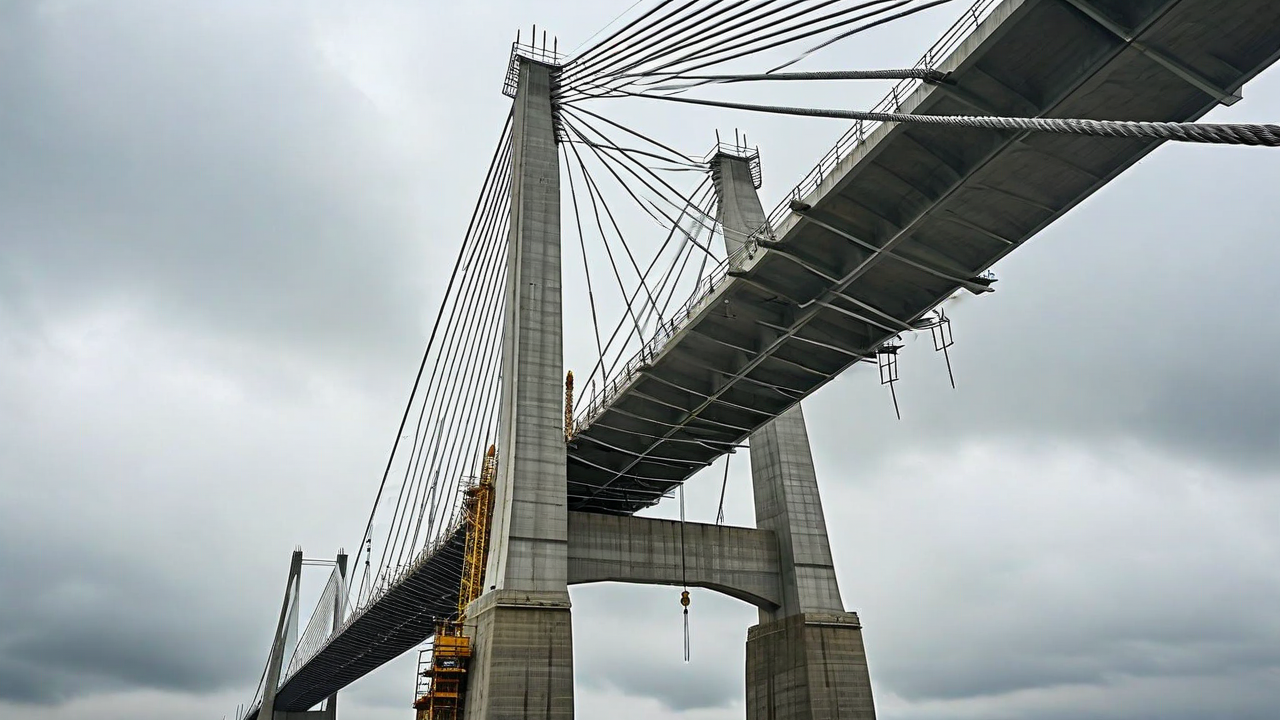
The world's infrastructure is aging simultaneously. The bridges, roads, water systems, power grids, and transit networks built during the great infrastructure expansion of the mid-twentieth century are approaching or have passed the end of their designed service lives. Deferred maintenance has accelerated deterioration. Climate change is imposing loads and conditions that infrastructure designed for historical weather patterns was not built to withstand. And the population and economic growth that has continued since this infrastructure was built has increased the demands it must meet far beyond the levels its designers anticipated.
The response — across North America, Europe, and the developed economies of Asia-Pacific — is an unprecedented wave of infrastructure investment. Legislation authorizing trillions of dollars in new infrastructure spending has created a project pipeline of extraordinary scale. These are not incremental maintenance programs. They are fundamental renewals — replacing bridges, overhauling transit systems, rebuilding water and wastewater networks, modernizing electrical grids, and installing the digital fiber and wireless infrastructure that the economy now requires. The construction industry has never faced a project pipeline of this scale and complexity.
AI is not merely one tool among many for executing this renewal. For a program of this scale, confronting an industry already constrained by labor shortages, cost inflation, and institutional capacity limitations, AI is an enabling technology without which much of the required work simply cannot be completed on any reasonable timeline. The gap between the scale of need and the available capacity can only be closed by dramatically improving the productivity of every part of the delivery system — design, procurement, construction execution, and asset management. AI is the most powerful productivity multiplier available to the industry.
Asset Condition Assessment at Scale
The first challenge in any infrastructure renewal program is understanding the actual condition of the existing assets. This sounds straightforward but is genuinely difficult. A large transit authority may operate thousands of lane-miles of track and dozens of stations. A state transportation department manages thousands of bridges and hundreds of miles of tunnels. Traditional condition assessment approaches — periodic physical inspection by teams of trained inspectors — are slow, expensive, and systematically limited by the capacity of the human inspection workforce. The result is that most infrastructure owners have condition data that is years out of date for significant portions of their asset portfolio.
AI-powered condition assessment platforms are transforming this capability. Autonomous inspection vehicles equipped with multi-sensor arrays — high-resolution cameras, LiDAR, ground-penetrating radar, acoustic sensors — can cover vastly more infrastructure per unit of time than human inspection teams, generating rich datasets that AI models analyze to identify defects, measure deterioration rates, and predict remaining service life. Drone inspection systems, now highly mature for applications like bridge deck inspection and tower assessment, can conduct surveys safely and efficiently in conditions that make human inspection dangerous or impractical.
The AI analysis layer is what converts the sensor data into actionable asset management information. Machine learning models trained on labeled inspection datasets can identify and classify defects — concrete cracking, rebar corrosion, structural deformation, pavement distress — with a consistency and precision that manual review cannot match. Deterioration models built on the condition data across an asset portfolio can forecast the condition trajectory of individual assets, enabling asset managers to identify which assets will reach critical condition thresholds within their planning horizons and prioritize renewal investment accordingly.
Program Management for Mega-Projects
Infrastructure renewal programs of the scale being authorized are not individual projects — they are portfolios of hundreds or thousands of individual projects that must be coordinated across extended geographies, multiple implementing agencies, and decade-long execution timelines. Managing these programs effectively requires visibility and coordination capabilities that traditional project management approaches, designed for single projects, cannot provide.
AI program management platforms are being designed specifically for this environment. Unified data models that aggregate cost, schedule, and performance data across hundreds of projects in a program allow program managers to identify emerging issues at the portfolio level — cost trends that indicate systemic challenges, schedule patterns that reveal resource constraints, or quality issues that appear across multiple projects and suggest a common root cause. Cross-project resource optimization models can allocate labor and equipment across the portfolio to maximize overall program productivity, rather than optimizing each project in isolation.
The regulatory and reporting environment for major infrastructure programs is also an area where AI is delivering significant value. Programs funded through federal legislation carry substantial reporting requirements — quarterly progress reports, cost certification, DBE compliance tracking, Davis-Bacon wage compliance, and environmental monitoring. AI systems that automate the compilation of this reporting from project data systems reduce the administrative burden on program management teams and improve the accuracy and timeliness of the reporting that regulators and funders require.
Geotechnical and Environmental Intelligence
Infrastructure projects encounter ground conditions and environmental constraints that can devastate project budgets and schedules when they are not anticipated and managed effectively. Unexpected soil conditions — soft soils, contaminated ground, buried obstructions, high groundwater — are among the most common drivers of cost overruns on civil infrastructure projects. Environmental constraints — endangered species habitats, wetland delineations, cultural resource sites — can halt construction entirely if they are encountered without adequate advance preparation.
AI geotechnical intelligence platforms can dramatically improve subsurface prediction by combining historical borehole data, geological maps, remote sensing data, and machine learning models trained on the relationship between surface observables and subsurface conditions. These models produce probabilistic subsurface predictions that give designers and contractors a more accurate picture of the ground conditions they are likely to encounter — enabling design decisions and construction planning that reflect actual risk rather than optimistic assumptions.
Environmental screening AI that integrates regulatory databases, species distribution models, and remote sensing data can identify potential environmental constraints early in the project development process — before costly design work has been committed to alignments or configurations that will require modification. Early identification of constraints enables design responses that avoid or mitigate environmental conflicts at a fraction of the cost of addressing them after construction has begun.
Asset Management Intelligence for Long-Duration Assets
Infrastructure assets are managed over operational lifetimes measured in decades, and the decisions made during those decades determine whether the initial investment delivers its intended social and economic value. Maintenance strategies that preserve asset condition over the long term are far more economical than the deferred maintenance patterns that have driven the current renewal crisis — but making the right maintenance investment decisions requires understanding how individual assets respond to maintenance interventions, which requires models trained on long-term asset performance data.
AI asset management systems that accumulate performance data over the operational life of infrastructure assets are building the training datasets that enable increasingly sophisticated maintenance optimization. Reinforcement learning models that explore the trade-offs between different maintenance strategies across the range of infrastructure conditions can identify maintenance policies that minimize total lifecycle cost — providing asset managers with evidence-based guidance that replaces the schedule-based maintenance traditions that were adopted before the data infrastructure to support performance-based alternatives existed.
The implications for infrastructure finance are significant. Infrastructure assets whose maintenance and remaining service life can be predicted with greater accuracy are easier to finance and refinance, because lenders and investors have better information about the risk they are underwriting. AI asset management intelligence that improves the accuracy of infrastructure condition assessment and service life prediction is creating financial infrastructure value that extends well beyond the operational benefits to asset owners.
Key Takeaways
- A wave of aging infrastructure and unprecedented renewal investment is creating the largest construction market of the coming decade.
- AI-powered inspection systems using autonomous vehicles and drones can cover infrastructure networks at a speed and scale that traditional human inspection cannot match.
- Program management AI provides portfolio-level visibility across hundreds of simultaneous projects — capabilities traditional project management tools were not designed for.
- Geotechnical AI combining historical borehole data and machine learning models improves subsurface prediction, reducing the most common source of civil project cost overruns.
- AI asset management systems accumulating performance data over asset lifetimes are building the foundations for evidence-based maintenance optimization.
- Infrastructure AI improves not only operational efficiency but financial risk assessment — creating value that extends to infrastructure investors and lenders.
Infrastructure intelligence is a core investment area at CoConstruct AI Ventures. We are backing founders building AI systems for condition assessment, program management, and asset optimization across civil infrastructure. Get in touch or explore our portfolio.