For much of the twentieth century, construction projects were coordinated through paper — drawings, specifications, schedules, and correspondence that were reproduced, distributed, and revised in physical form. The digitization of this paper workflow, beginning in the 1990s with CAD and project management software, improved information distribution but did not fundamentally change the underlying model. Digital files replaced paper files, but the information remained siloed, static, and disconnected from the physical work happening on site.
Building Information Modeling (BIM) represented a step toward something genuinely different: not just digital documents but digital models that capture the geometric and data relationships between building elements, allowing coordination that paper workflows could never support. A structural engineer's beam and an MEP engineer's ductwork could now be tested for spatial conflict in a digital environment before either was fabricated — a capability that has demonstrably reduced the coordination clashes that traditionally drove enormous rework costs.
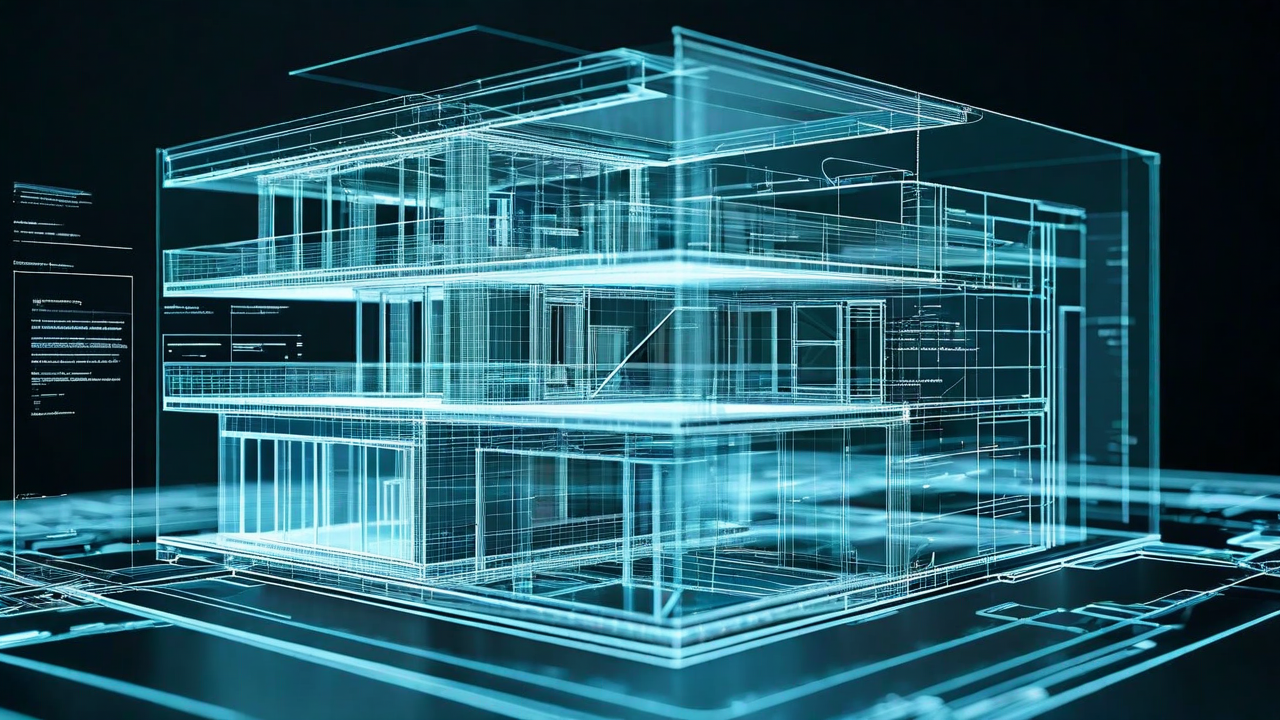
But BIM, as it has been practiced for most of its existence, is still a design-phase tool — a model of what a building should be, not a dynamic representation of what it is. The emergence of digital twin technology, combined with AI systems capable of making sense of the data these twins generate, is taking the next step: a living digital representation of the building that evolves in real time as construction progresses and as the building is operated. This convergence of BIM, IoT sensors, AI analytics, and reality capture is the foundation of the data-driven construction project.
What Makes a Digital Twin Different from a BIM Model
The critical distinction between a BIM model and a digital twin is the direction of information flow. A BIM model is a design intent document — it represents what the building should look like and how its systems should be configured. Information flows from designers to the model. A digital twin is a dynamic representation that is continuously updated to reflect the actual state of the physical asset — information flows from the physical world into the digital representation, creating a real-time mirror of what is actually happening.
For a construction project, the digital twin evolves as work is installed. As-built conditions are captured through reality capture technologies — photogrammetric surveys from 360-degree cameras or drones, LiDAR scanning, structured light scanning — and merged with the design BIM to create an as-built model that shows not just what was planned but what was actually built. Deviations from design intent are automatically identified and flagged, enabling quality control processes that catch issues while correction is still practical.
For an operating building, the digital twin grows richer over time as sensor data is accumulated and the AI systems analyzing that data develop deeper models of building behavior. The digital twin of a ten-year-old building that has been monitored with sensors throughout its operation contains an extraordinary record of how the building performs under the full range of conditions it has experienced — a record that is deeply valuable for operations, maintenance planning, and the evaluation of future capital improvements.
AI-Powered Clash Detection and Coordination
Coordination between building systems — structural, architectural, mechanical, electrical, plumbing, fire protection, and specialty systems — has always been one of the most challenging aspects of complex building design. When multiple trades are working in the same spaces, their systems must be carefully coordinated to avoid physical conflicts that require field modifications that are expensive and disruptive. Traditional coordination workflows relied on manual review of 2D drawings by experienced coordinators — an approach that was time-consuming, expensive, and systematically missed the three-dimensional conflicts that only become visible when work is actually being installed.
BIM-based 3D coordination represented a major improvement, allowing spatial conflicts to be identified in the digital model before work is fabricated or installed. AI systems applied to this coordination process are taking it further. Machine learning models trained on historical coordination data can prioritize the clashes most likely to cause significant field impact, reducing the volume of issues that require human review. Automated resolution suggestions — derived from standard coordination practices and project-specific constraints — can reduce the time required to resolve common clash types. And continuous model analysis can flag coordination issues in real time as design changes are made, preventing the accumulation of unresolved conflicts that characterizes many coordination processes.
Reality Capture and As-Built Verification
The gap between design intent and as-built conditions is one of the construction industry's most persistent and costly challenges. Work is installed incorrectly, dimensions drift outside acceptable tolerances, and field conditions differ from design assumptions in ways that require modifications that are never formally documented. The result is a building that deviates from its design drawings in ways that are only fully understood after completion — when the cost of correction is highest and the documentation needed for operations and future modifications is most imprecise.
Reality capture workflows that use photogrammetry, LiDAR, or structured light scanning to create dense 3D point clouds of as-built conditions are becoming more accessible and cost-effective as the hardware for these workflows becomes less expensive and the software for processing the data becomes more capable. AI-powered automated comparison of reality capture data against design BIM models can identify dimensional deviations, missing elements, or incorrectly installed components at a speed and scale that manual inspection cannot match.
The economic case for systematic reality capture on construction projects is compelling. The cost of documentation through regular scanning on a large commercial project is a small fraction of the total project budget, but the value of that documentation — in claims avoidance, dispute resolution, and operational handoff — can be substantial. As-built BIM models that are verified against reality capture data provide a foundation for building operations that is far more accurate and useful than the as-built drawings that have traditionally been delivered at project completion.
From Project to Portfolio: AI Analytics Across the Asset Lifecycle
For building owners and real estate investors who own multiple assets, the aggregate data generated by digital twins across a portfolio creates an analytical resource of extraordinary value. Performance comparisons across similar assets reveal the operational variations that drive differences in energy consumption, maintenance cost, and tenant satisfaction. AI systems trained on portfolio-wide data can identify the building conditions and operating strategies most strongly correlated with the best operational outcomes, enabling systematic improvement across the entire portfolio rather than project-by-project experimentation.
Capital planning decisions — which building systems should be replaced or upgraded, and in what sequence — can be made with far greater precision when informed by the actual condition and performance trajectory of each asset's systems as measured by sensor data and AI analysis. Rather than replacing equipment on manufacturer-recommended schedules that may not reflect actual equipment condition, portfolio managers can prioritize capital expenditures based on actual failure risk data, optimizing the allocation of limited capital budgets across the full portfolio.
The data flywheel effect is significant: each asset adds to the training data for the AI models that analyze the portfolio, making those models more accurate for all assets. As a portfolio grows and the temporal depth of the data increases, the analytical value of the digital twin infrastructure compounds in ways that create durable competitive advantage for owners who have invested in this capability.
Key Takeaways
- Digital twins extend BIM from a static design intent document to a living representation continuously updated by real-world data.
- AI-powered clash detection reduces the coordination work required to resolve conflicts and improves the quality of the coordination output.
- Reality capture workflows that compare as-built conditions against design BIM are becoming cost-effective and capable enough for routine deployment.
- The gap between design intent and as-built conditions is a significant and underaddressed source of construction cost and operational risk.
- Portfolio-level AI analytics across multiple digital twins create compounding value that single-asset approaches cannot achieve.
- The data flywheel effect makes early investment in digital twin infrastructure increasingly valuable over time.
Digital twin and BIM intelligence is a high-priority investment area for CoConstruct AI Ventures. We are actively backing founders building the next generation of reality capture, coordination, and portfolio analytics platforms. Connect with our team to discuss your company.